Action Hair Clinic - Hair Loss Prevention - Hair Loss Products -
Hair Loss Treatment
SO WHAT CAUSES HAIR LOSS AND WHAT CAN YOU DO ABOUT IT?
Alopecia (al-o-pe'sh-ah) is the technical term for any abnormal form of loss of hair.
The natural falling out of the hair should not be confused with alopecia. When hair has grown
to its full length, it comes out by itself and is replaced by a new hair. The natural shedding
of hair occurs most frequently in spring and fall. On the other hand, hair lost in alopecia
does not come back unless special treatments are given to encourage hair growth. Certain
hairstyles such as ponytail and tight braids may be contributing factors in constant hair loss
or baldness. Alopecia senilis (se-nil'is) is the form of baldness occurring in old age. This
loss of hair is permanent. Alopecia prematura (pre-mah-tu'-rah) is the form of baldness
beginning any time before middle-age with a slow thinning process. This condition is caused by
the first hairs falling out and being replaced by weaker ones. Alopecia areata (ar-e-a'tah) is
the sudden falling out of hair in round patches or baldness in spots, sometimes caused by
anemia, scarlet fever, typhoid fever or syphilis. Affected areas are slightly depressed,
smooth and very pale, due to a decreased blood supply. Patches may be round or irregular in
shape and they may vary in size from one-half inch to 2-3 inches in diameter. In most
conditions of alopecia areata, the nervous system has been subjected to some injury. Since
the flow of blood is influenced by the nervous system, the affected area is also poorly
nourished.
HAIR LOSS (ALOPECIA ANDROGENETICA)
IS HEREDITARYLevels of testosterone in the body and
sensitivity to its side effects are determined by hereditary factors and are related to male hair loss
and to some extent also female hair loss. Tightness of scalp is also hereditary.
TIGHTNESS OF SCALP AND POOR CIRCULATION CAUSE HAIR LOSS
Tight scalp is the main cause of impaired blood flow, particularly on
the top of the head. Microcirculation in the scalp can be almost completely hindered. Contracted
blood vessels are prevented from transporting necessary nutrients and trace elements to the hair
follicles. Lack of oxygen prevents effective keratinisation. The hair growth cycle is disturbed,
in that once hair attains the resting phase it remains there unable to recommence growth. The
hair follicle grows into gradual decline and ultimately vanishes, merging with skin tissue.
Unless adequate blood flow can be restored, tight sections of the scalp will become bald. Help
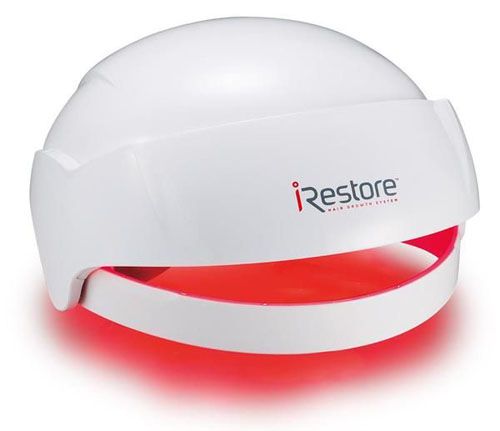
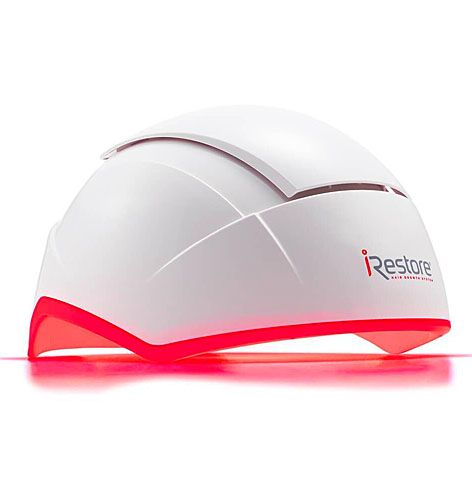
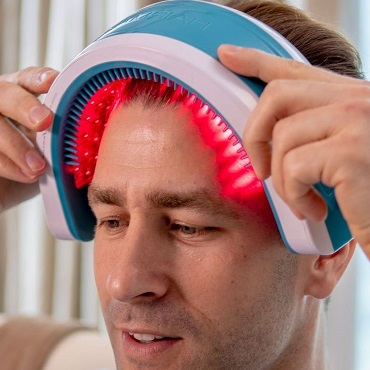
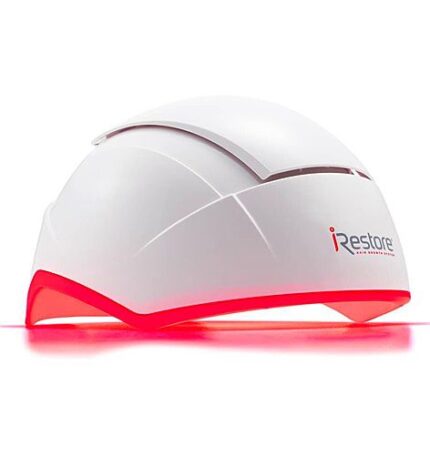
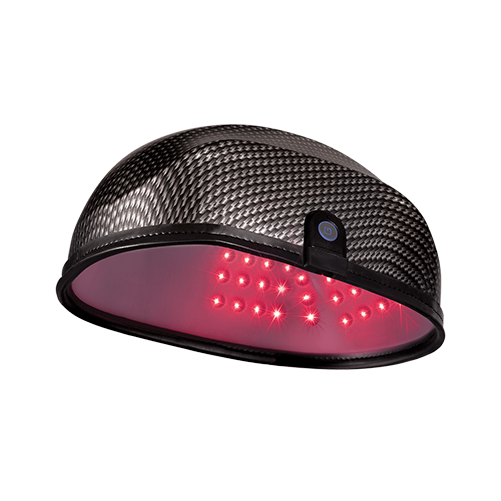
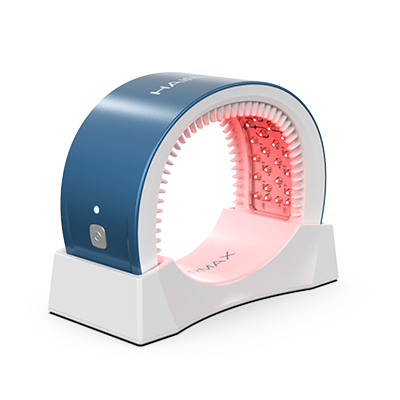
may be possible through laser treatment, which stimulates the circulation in the scalp,
allowing oxygen and necessary nutrients to be transported to the hair follicle. The efficacies
of medicinal preparations that prevent hair loss are based on their circulation stimulation
properties. Each individual is subject to many factors that can cause hair loss. The effects of
each can however vary with age.
IS THERE ANY SCIENTIFIC PROOF?
Various light sources, including lasers, have been used in attempts to
grow hair and stop hair loss since the 1950’s. The laser was placed 30 centimetres from the
alopecia area with dosages ranging from 3-4 joule per sq.cm. No fibres or lenses were used. In
the study, microscopic evaluation of the hair shaft structure on the Alopecia Areata irradiated
areas showed a clear medulla rich in keratin after treatment. At the 4th Annual Meeting of the
Japan Laser Therapy Association in 1992, success was reported with an increase in both hair
growth and density of the hair follicles in the laser treated areas of both male and female
stress Alopecia and Alopecia Areata. Only one failure out of 40 cases was reported in two
papers.
HAIR LOSS, REGROWTH
A double-blind comparative study of laser treatment with placebo
laser (LED). The duration of hair loss and baldness, according to Hamilton classification, were
recorded. A skin biopsy for histological examination was taken before and after treatment. In
addition, a photograph was taken of the patients at the same time. Hair shaft thickness was
measured with hair stretching equipment where the hairs can be stretched on a graded scale
from 0-10. Normal value of hair shaft stretching is set at 5. All patients with the exception
of one, in the laser treated group showed a complete stop of hair loss. All patients, except 3
showed a clear regrowth of hair with a reduction of at least one category in the Hamilton
classification. The results were confirmed by histological examination. Pre-treatment typically
showed the dermas with large, relatively normal amounts of follicles. Most of them were in the
telogenphase and did not show any real hair. Some of the follicles were widened with keratin
taps and follicle opening, post treatment showed the dermis with almost the same amount of hair
follicles as pre-treatment, although a number of new follicles could be seen with clearly
noticeable hair growth. 50% of the follicles are now in the anagenphase. A clearly visible
regrowth of hairs were found in most treatment sample comparisons. When comparing the
histological findings, transformation into more agnogenic hair follicles could be observed in
83% of the patients on laser treatment but in none of the placebo patients. Out of the 19
patients, 14 showed an increase in hair thickness, and all 18 showed improvement in general
hair shaft quality measured with the hair stretcher. The results showed no improvement in the
placebo group or any adverse effects of the treatment. The present double-blind study
definitely showed that regrowth of new hairs can be achieved in most middle-aged and younger
males with typical male baldness when the scalp is irradiated with Laser for 5 weeks, with
follow up maintenance treatments. Material for the growth of the hair comes from the papilla.
As long as the papilla is not destroyed, the hair will grow. If the hair is pulled out from
the roots, it will nevertheless grow again. Should the papilla be destroyed, it will never
grow again.
IN HUMANS, NEW HAIR REPLACES OLD HAIR IN THE FOLLOWING WAYS:
1. The bulb
loosens and separates from the papilla.
2. The bulb moves upward in the hair follicle.
3. The hair moves slowly to the surface where it is shed.
4. The new hair is formed by cell division that takes place at the point of the root of the
hair and around the papilla.
The exact life span of hair has not been agreed upon. The average life of hair will range
from two to four years. Other factors, such as sex, age, type of hair, heredity and health,
have a bearing on the duration of hair life. (While the life span of hair may differ with each
individual, the figures two to four years indicate a fair estimated period, considering age,
health, climate and other personal factors. Some authorities estimate the life span of hair to
range up to 7 years. Eyebrow hairs and eyelashes are replaced every four to five months.
There is an average of 1000 hairs to a square inch. The number of hairs on the head varies
with the colour of hair:
Blonde - 140,000
Black - 108,000 Brown - 110,000
Red - 90,000
THE HAIR SHAFT GROWTH CYCLEFirst, there is the
growth or anagen phase usually lasting 2 to 3 years. This is followed by the resting or
catagen phase, spanning 2 to 3 months, where the hair stops growing but doesn’t fall out.
Finally, there is a short phase of hair loss, the telogen phase, lasting several days. Laser
therapy increased scalp blood flow 54%.
DEMODEX PARASITE
A Tulane University study established the following about Demodex
Folliculorum.
1. Demodex was found on 88% of men and woman with thinning hair.
2. Demodex was not found on 91% of men and woman with normal hair density. This
shows there is a significant role for an association of Demodex with thinning hair.
Biotechnical
Researchers discovered the presence of Demodex Folliculorum on the scalps of 100% of men and
women with thinning hair who were clinically tested. Demodex produces the enzyme lipase which
is necessary for Demodex to digest the sebum it feeds on. Lipase can adversely affect the
quality, condition and appearance of your hair. Although the scientific world has known about
Demodex since the 1800’s, the connection between Demodex and thin looking hair was only
recently established.
HAIR LOSS PRODUCTS
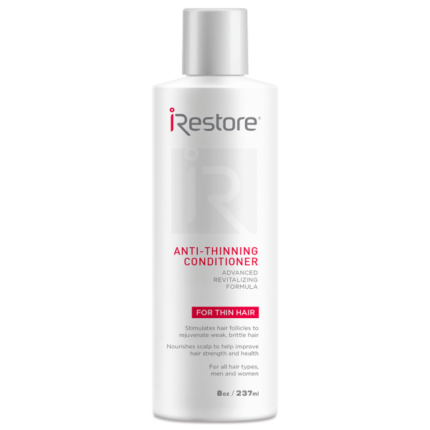
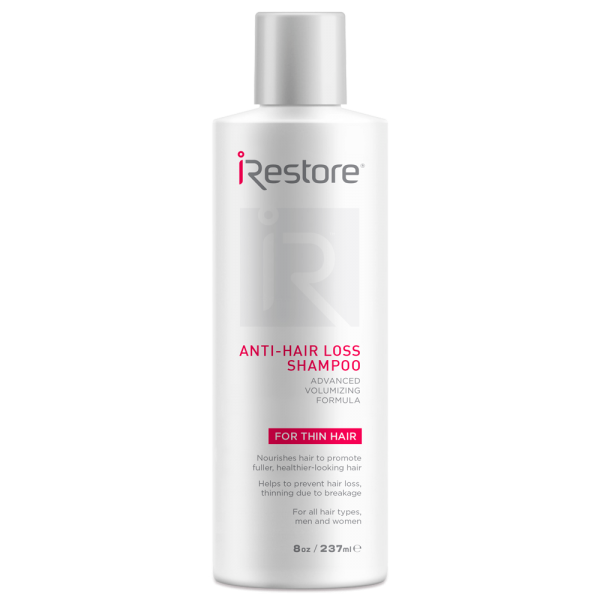
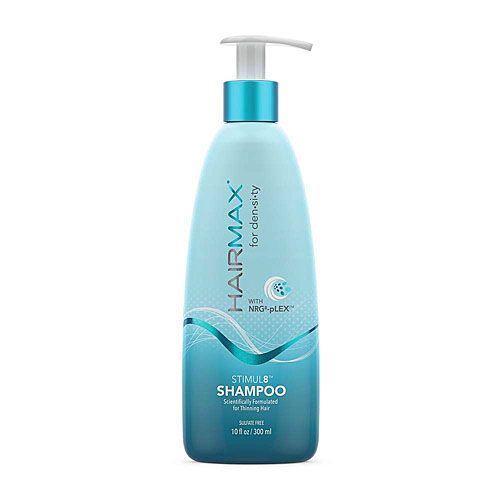
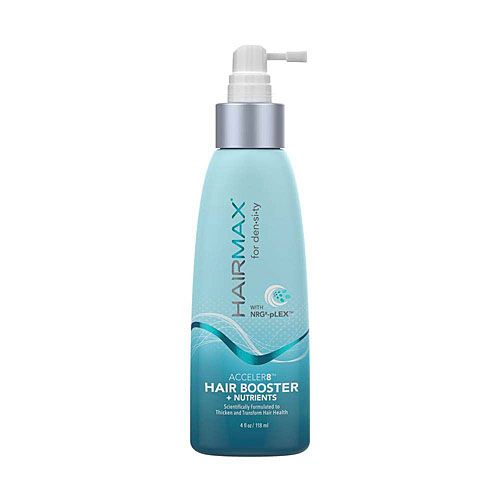
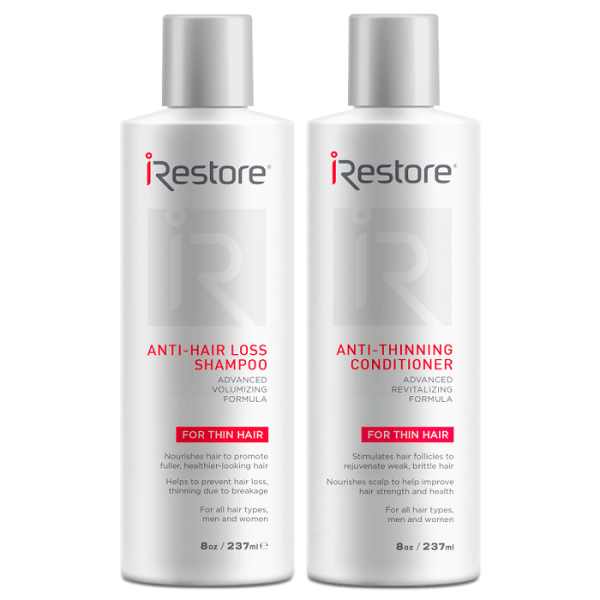
Our Action shampoo and conditioner contains none of the hidden hazards used
in normal shampoos. Our shampoo normalises oily and dry scalp, controls itch and dandruff and
brings hair follicles back to life. Action Hair shampoo has ingredients to help promote healthy
hair and scalp.
The primary ingredient in many shampoos is Sodium Laurel Sulphate (SLS)
and Sodium Laureth Sulphate (SLES). These ingredients are used as engine degreasers, car wash
soaps and garage floor cleaners because of their corrosive nature.
THE SCIENTIFIC FACTS:
SLS is absorbed systemically through the skin, it can penetrate and
be retained in the eye, brain, heart, liver and other organs. SLS also showed long-term
retention in tissues, up to five days after a single drop. It has been reported that SLS
extends the healing time of corneal tissue by a factor of five, from the normal 2 days to 10
days or more. It has been shown to damage protein formation in eye tissue in young animals,
raising serious concerns about the possibility of ocular tissue malformation and blindness in
infants and young children. SLES clinical studies show that it could cause hair loss when
applied to the scalp and has irritant properties. Because SLS is such a caustic cleaner, it
actually corrodes the hair follicle and impairs its ability to grow hair. SLES causes a
dramatic decline in the hair growth cycle, it prolongs the hair loss phase (normally 3 months)
by a factor of eight. SLS can also be implicated in scalp irritation, eczema, dandruff and
other scalp conditions.
SLS - SLES dries skin by stripping the protective lipids so it
can’t effectively regulate moisture. SLS - SLES can cause hair to dry out with split ends. In
patients with seborrhoea and exceed, SLS increases the irritant reactions and susceptibility.
Research has shown that SLS and SLES are potentially carcinogenic if formed in shampoos and
cleaners by reacting with other commonly used ingredients. The ingredients are often found in
many products (typically 90%). Large nitrate amounts may enter the blood system from just one
shampooing. SLES is the alcohol form(ethoxylated) of SLS and is slightly less irritating but
may cause more drying. They are both cheap chemicals and the bottle is usually more expensive
than the shampoo. They can both enter the blood stream and a small amount generates a large
amount of foam and when salt is added it thickens to give the illusion of being thick and
concentrated.
Propylene Glycol (PG) can cause liver abnormalities and kidney damage.
Tests show it can be a strong skin irritant. A clinical review was published by the American
Academy of Dermatologists concurring dermatitis and Propylene Glycol. This report showed
Propylene Glycol to cause a significant number of reactions and was a primary irritant to the
skin in even low levels of concentration. Recent findings indicate that Propylene Glycol has
severe adverse health effects and has been found to cause contact dermatitis, ototoxicity,
kidney damage, and liver abnormalities in various clinical human and animal studies.
New findings suggest that using PG and other occlusive (filming) ingredients on the skin
actually ages the skin prematurely.
"Action Hair Clinic For Hair Loss Facts"
PHONE 09 525 0216
For Free Hair Loss Products Information |